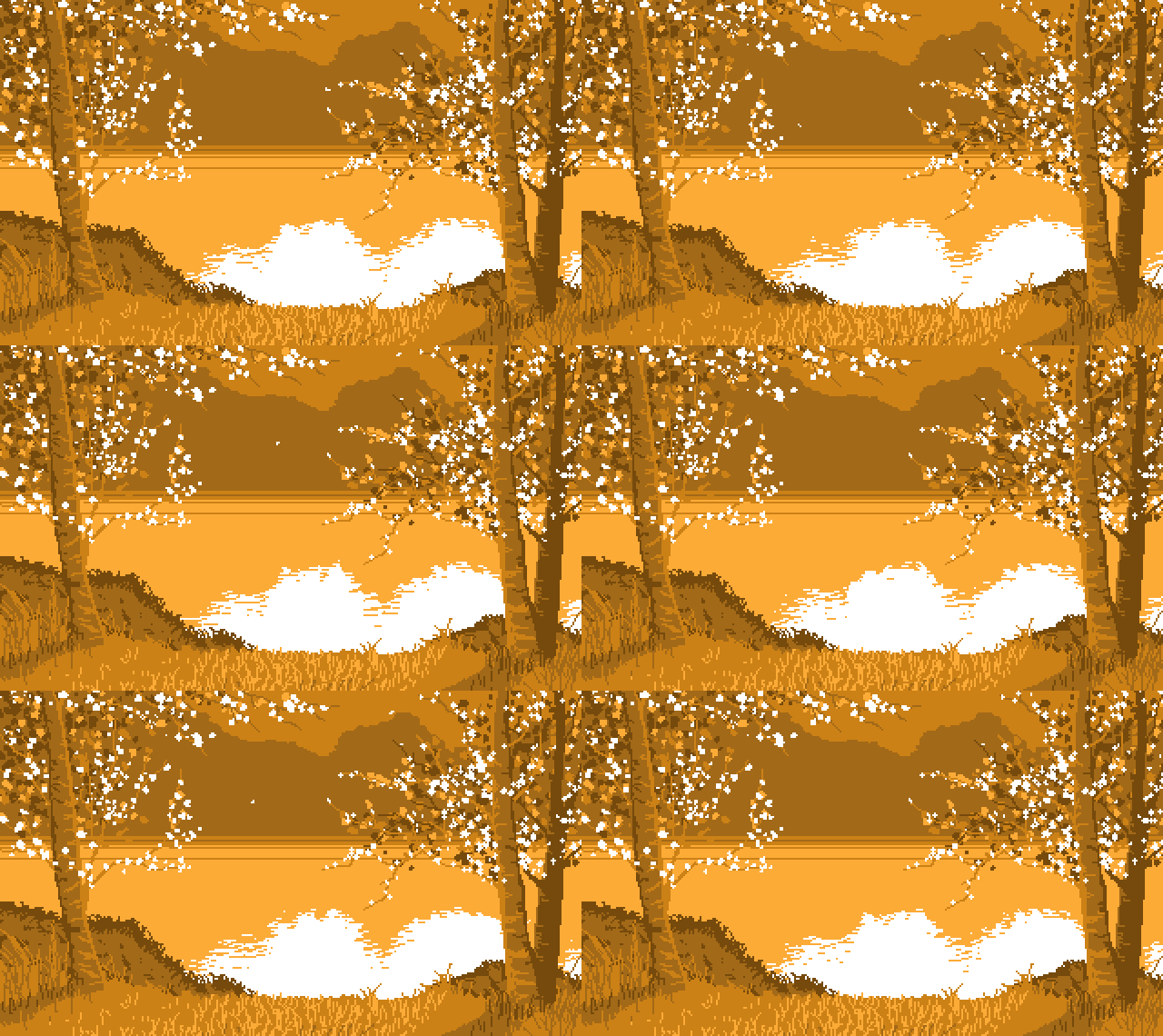
Pixel Artist-
A pixel artist is a graphic designer who specializes in computer art and can refer to a number of artistic and professional disciplines which focus on visual communication and presentation. Similar to chromoluminarism used in the pointillism style of painting, in which small distinct points of primary colors create the impression of a wide selection of secondary and intermediate colors, a pixel artist works with pixels, the smallest piece of information in an image. The technique relies on the perceptive ability of the eye and mind of the viewer to mix the color spots into a fuller range of tones. Pixel art is often utilitarian and anonymous. Pixel design can refer to both the process (designing) by which the communication is created and the products (designs) which are generated. Common uses of pixel design include print and broadcast media, web design and games.For example, a product package might include a logo or other artwork, organized text and pure design elements such as shapes and color which unify the piece.Composition is one of the most important features of design especially when utilizing pre-existing materials or using diverse elements. Pixel artists can also be a specialist in computer animation such as Computer Animation Production System users in post production of animated films and rendering (computer graphics) images like raster graphics. In the 2000s, pixel artists such as Tyler West, Stephane Martiniere and Daniel Dociu have gained international notoriety and artistic recognition, due in part to the popularity of computer and video games.For instance the E3 Media and Business Summit, an annual trade show for the computer and video games industry, has a concurrent juried art show, "Into the Pixel" starting in 2003.Jurist and Getty Research Institute curator Louis Marchesano noted that most of the works were concept pieces used in the development of games. Pixel artists are also used in digital forensics, an emerging field, to both create and detect fraud in all forms of media including "the courts, politics and scientific journals". For instance, the Federal Office of Research Integrity has said that the percent of allegations of fraud they investigated involved contested images has risen from less than 3 in 1990 to 44.1 percent in 2006.
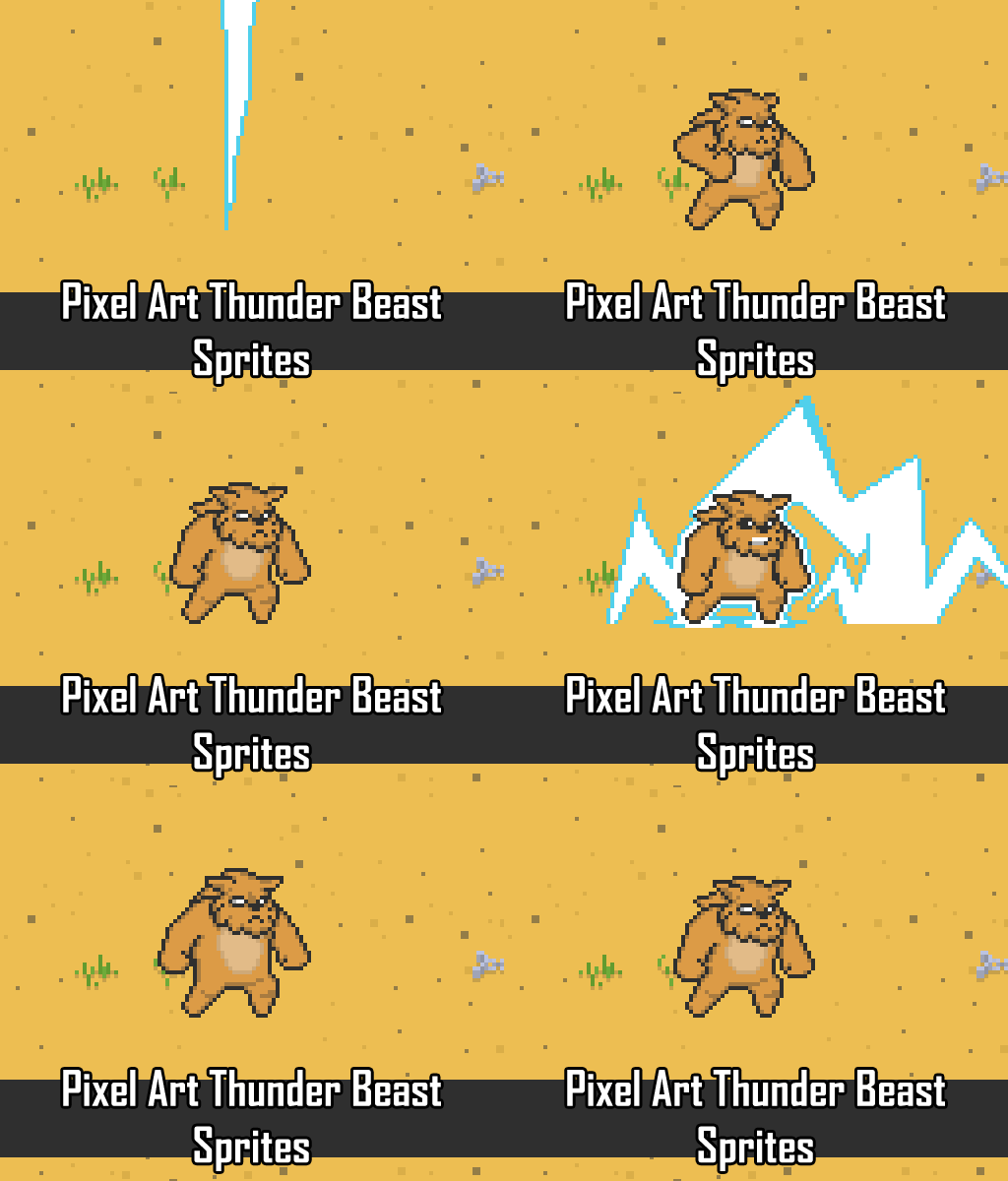
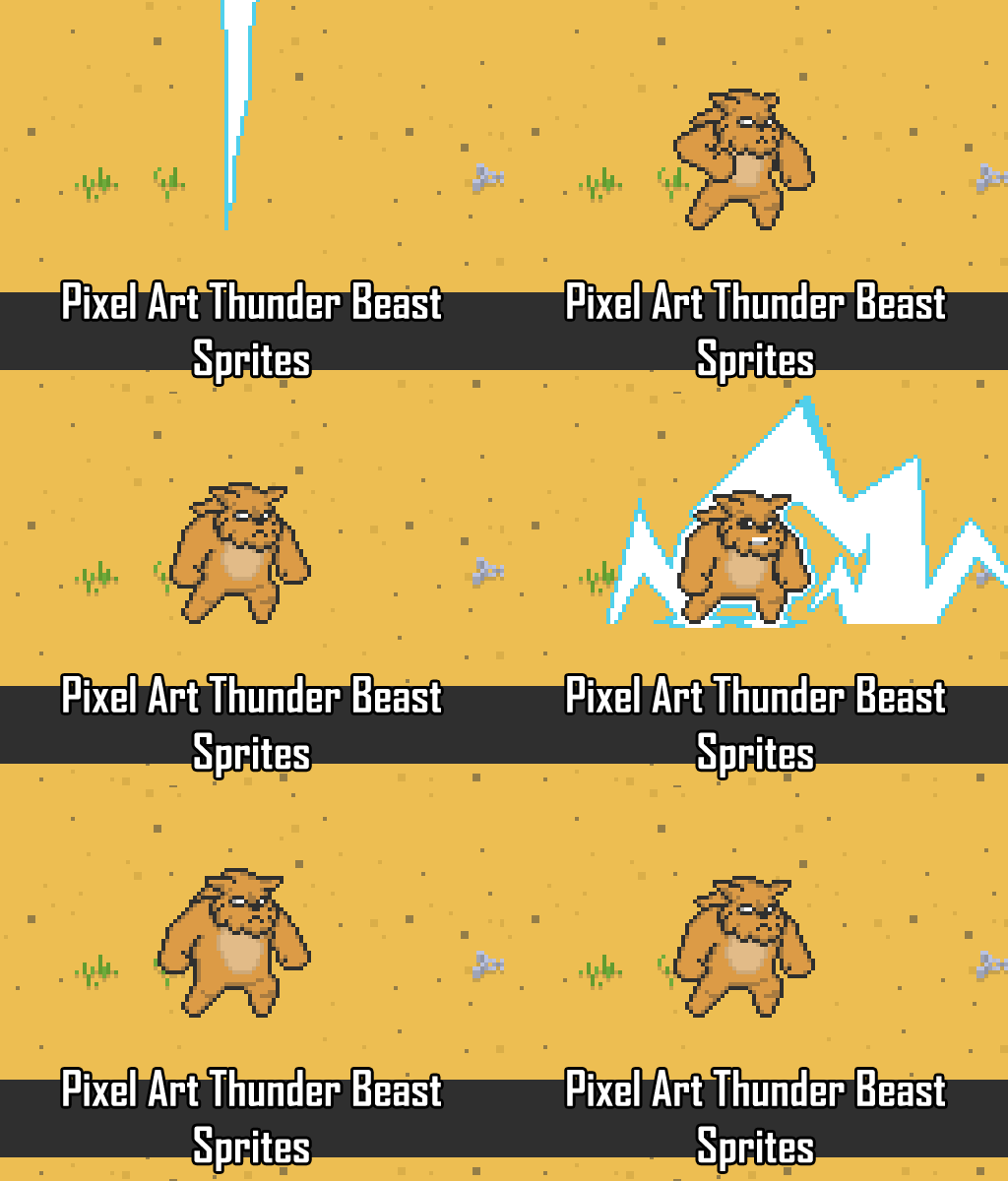
Background –
A pixel artist is one of the new media artists that employs technology while also utilizing traditional media and art forms. They may have a fine arts background such as photography, painting or drawing but self-taught designers and artists are also able to accomplish this work. They are often required to employ imaging and a full range of artistic and technological skills including those of conceptual artists. In digital imaging, a pixel (picture element) is the smallest piece of information in an image.The word pixel is based on a contraction of pix (for "pictures") and el (for "element"); similar formations with el for "element" include voxel, luxel, and texel. Pixels are normally arranged in a regular 2-dimensional grid, and are often represented using dots, squares, or rectangles. Each pixel is a sample of an original image, where more samples typically provide a more accurate representation of the original. The intensity of each pixel is variable; in color systems, each pixel has typically three or four components such as red, green, and blue, or cyan, magenta, yellow, and black. Neuroplasticity is a key element of observing a many pixel images. While two individuals will observe the same photons reflecting off a photorealistic image and hitting their retinas, someone whose mind has been primed with the theory of pointillism may see a very different image as the image is interpreted in the visual cortex.
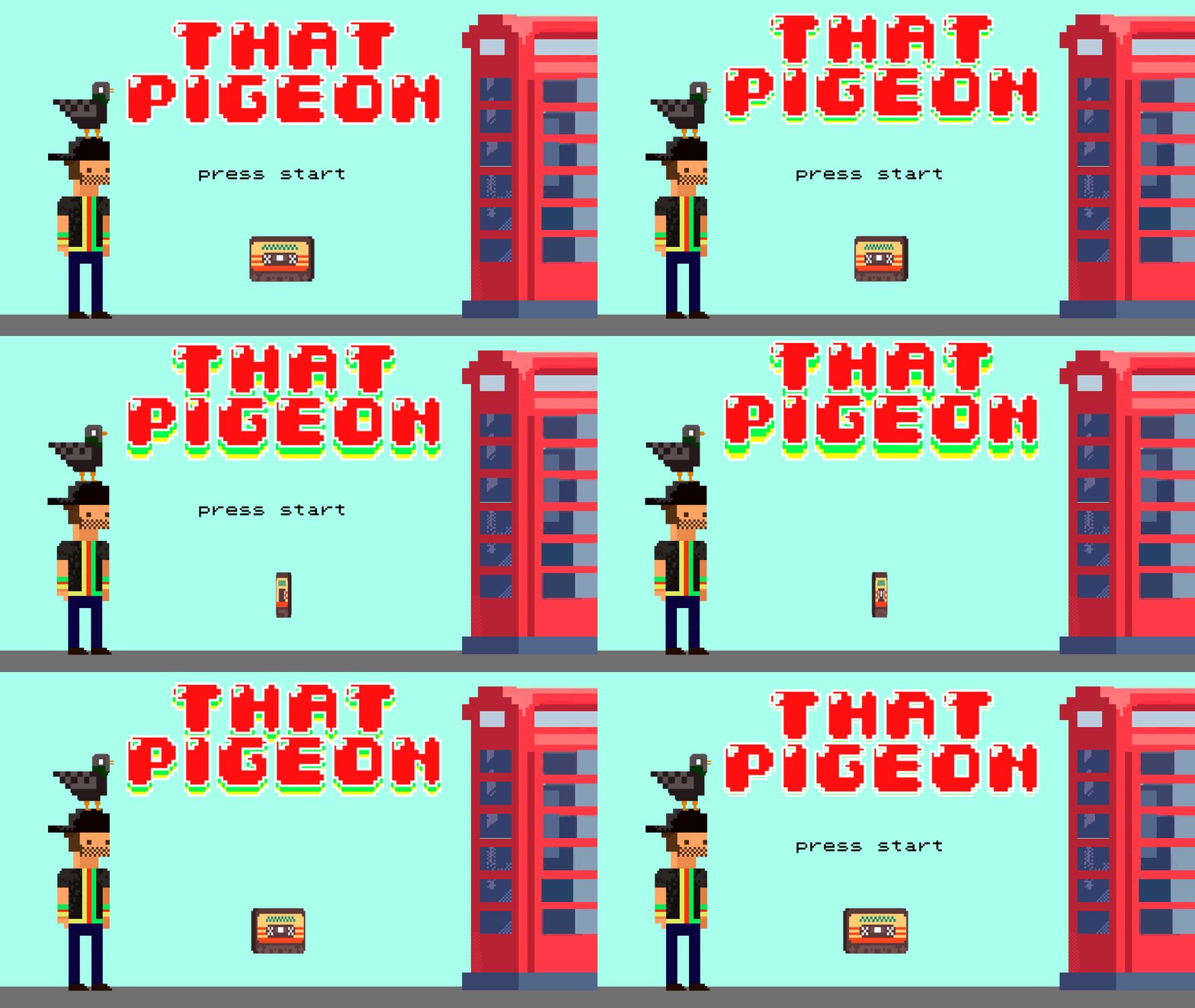
Technique-
The total number of pixels (image resolution), and the amount of information in each pixel (often called color depth) determine the quality of an image. For example, an image that stores 24 bits of color-information per pixel (the standard for computer displays since around 1995) can represent smoother degrees of shading than one that only stores 16 bits per pixel, but not as smooth as one that stores 48 bits. Likewise, an imagesampled at 640 x 480 pixels (and therefore containing 307,200 pixels) will look rough and blocky compared to one sampled at 1280 x 1024 (1,310,720 pixels). Because it takes a large amount of data to store a high-quality image, computer software often uses data compression techniques to reduce this size for images stored on disk. Some techniques sacrifice information, and therefore image quality, in order to achieve a smaller file-size. Computer scientists refer to compression techniques that lose information as lossy compression. Modern computer-monitors typically display about 72 to 130 pixels per inch (PPI), and some modern consumer printers can resolve 2400 dots per inch (DPI) or more; determining the most appropriate image resolution for a given printer-resolution can pose difficulties, since printed output may have a greater level of detail than a viewer can discern on a monitor. Typically, a resolution of 150 to 300 pixel per inch works well for 4-color process (CMYK) printing. Drawings usually start with what is called the line art, which is the basic line that defines the item the artist intends to create. Line arts can be either traced over scanned drawings or hand drawn on the computer itself by the use of a mouse or a graphics tablet and are often shared among other pixel artists in diverse websites in order to receive some feedback. Other techniques, some resembling painting, also exist, such as knowledge of the color theory. The limited palette often implemented into pixel art usually promotes the use of dithering in order to achieve different shades and colors (when necessary); hand-made anti-aliasing is also used for smoother purposes. A pixel artist will exponentially increase the zoom of whatever they are working on to make adjustments as needed and then view the results until desired changes are achieved.
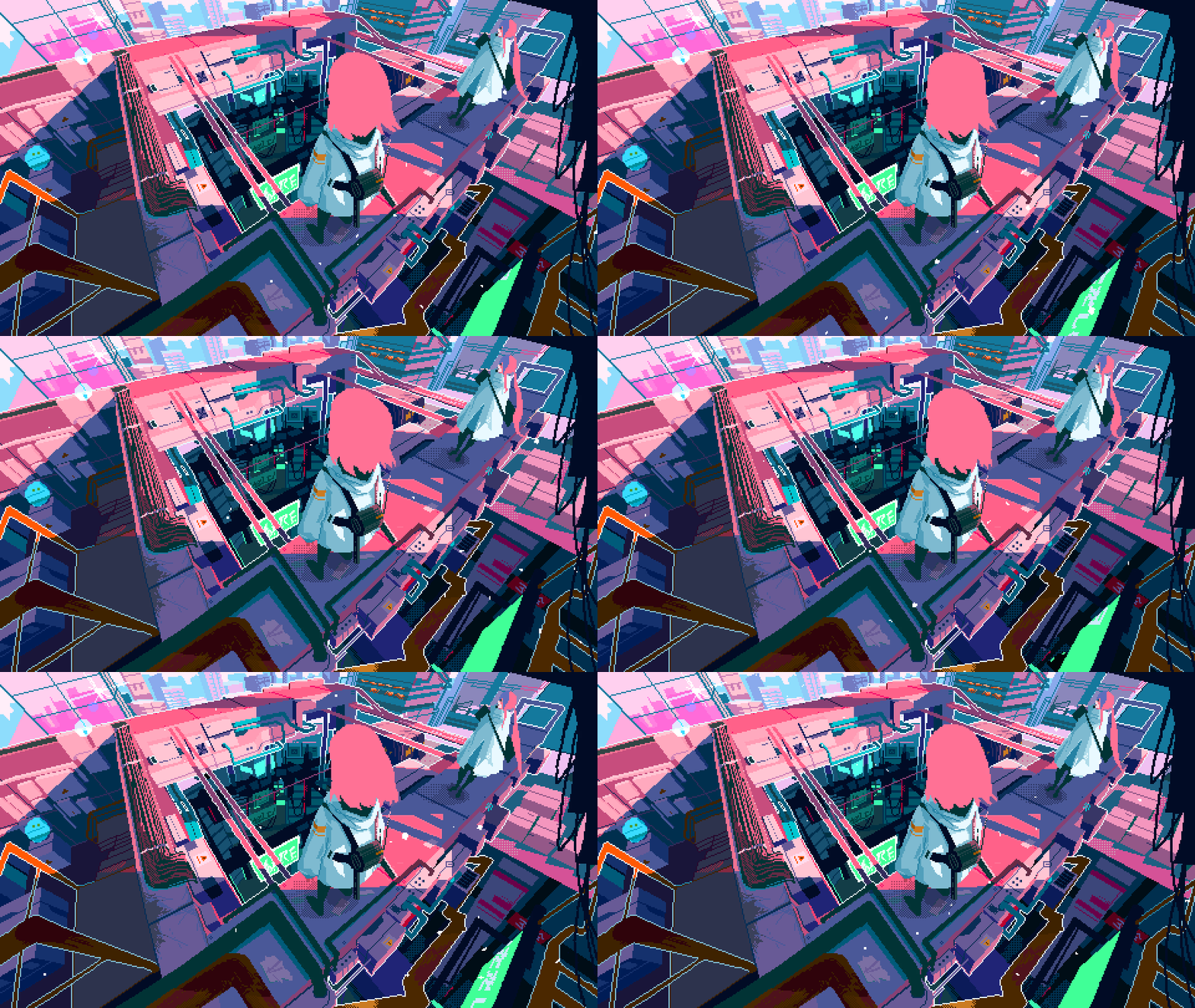
Spriting–
Spriting is usually defined as the act of creating partially transparent 2D raster graphics for use in video games, commonly referred to as sprites; by extension, it is also used to refer to the act of creating pixel art, though not all sprites are necessarily done in that style. Pixel art comprises a large part of "sprite art" as a whole; though technological advances since the mid-nineties allowed pre-rendered raytraced imagery, or essentially any 2-dimensional image style to be used as a sprite. In some communities, "pixel art" is considered a synonym of "sprite art", and classification of artwork as "sprite art" is held to the same standards, though pixel art itself is not limited to the creation of sprites. Though sprites have been a major component of many early video games, the modern, "mainstream" activity called "Spriting" arose with the advent of widely-available computer graphics programs capable of editing and saving raster images. Such programs include MacPaint, and the later Microsoft Paint. The distinctive style of imagery used in many early computer and arcade games inspired people to create similar works of their own. Having the tools available to do this allowed many people to experiment with what was previously a prohibitively difficult-to-enter craft. With the advent of the internet, practitioners of spriting were able to collaborate and share their creations, which established spriting as a proper hobby, and also exposed these artists to prospective employers, and vice-versa. Spriting is primarily done for the direct purpose of creating video game artwork, especially by professional artists. By hobbyists, though, it is often done to create stand-alone artwork, or as part of a larger piece of art, such as a web comic. The use of sprites as cookie-cutter elements of comic strips has led to a genre called sprite comics.
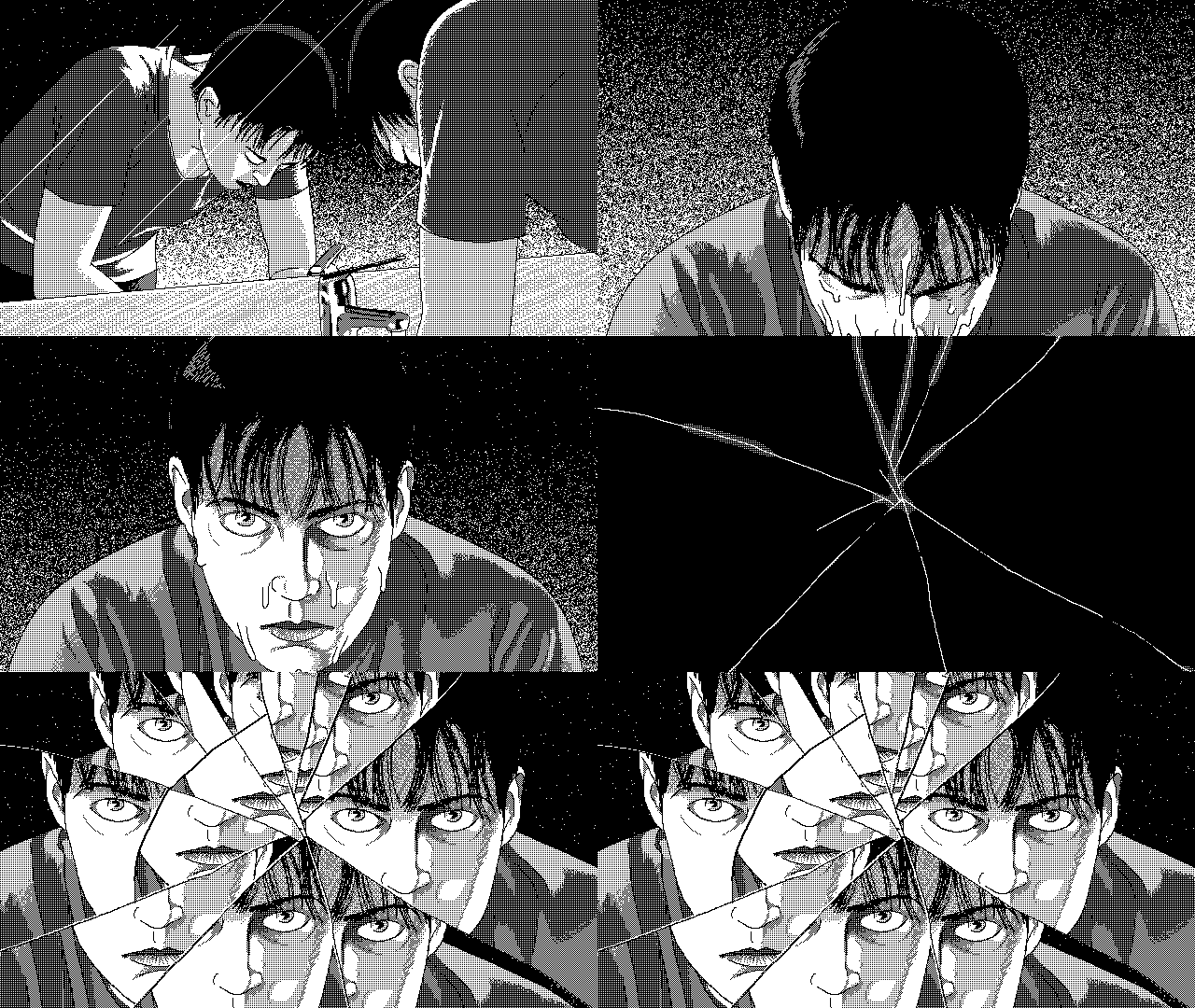
Modified Commercial Sprites-
Despite copyright concerns, many hobbyists new to spriting begin their work by editing sprite imagery made for commercial video games; often games seen on console platforms like the SNES or Sega Genesis. Fans of these images collect transcribed copies of them in common image formats, and post them on websites for others to see. This process of extracting the imagery is called "ripping" or "dumping". In "ripping" a person collects the imagery via screen captures of an emulator running the source game - this practice is in enough demand that some emulators, like ZSNES, have a feature to optionally display only desired layers of the game's imagery, making it easier to copy. "Dumping" involves a more sophisticated way of directly extracting the images from the game; this is often rather difficult, since on systems like the SNES, the larger images seen on-screen are stored in several smaller parts. These images are collected into compilations known as sprite sheets, large raster images which each hold all of the frames associated with a single character, or a single terrain environment. These are the de facto standard for trading ripped commercial sprites online. Those who edit these images, which generally depict characters in the game, often begin by simply shifting the color palette; thus turning all of a character's primary costume color into a different color. Later, they will redraw small parts of the image, making slight changes to the costuming, etc. This is generally much less intimidating than creating a full, original work, and allows them practice in imitating and matching the styles used by professional artists. This progresses to modifications which are sufficiently extensive as to make the result unrecognizable from the source work from which it was derived.
With sufficient skill, often drawing from many general aspects of illustration (shading, color theory, foreshortening, and often comic art), an artist can create professional-quality sprite images and pixel art from scratch. Artists will make sprites-to-order as a hobby, for either themselves, or friends. These sprites, created completely from scratch, but generally imitating sprites from a commercial game, are called "Custom" sprites, and are often seen as avatars, buddy icons, small animations, and elements of web comics. They will also often be used for small-scale video game projects. Original Sprites are also used for advertisement. Sometimes you will see a spriter, or a small group of spriters, use a specific icon or logo made entirely from scratch. Most spriters that sprite for others yet do not have a group of spriters to work with them are called either Spriters-For-Hire, or Lone Spriters. After a while, once these spriters become more popular around forums and sometimes even YouTube, their icon or logo will become famous and well-known throughout the Internet.
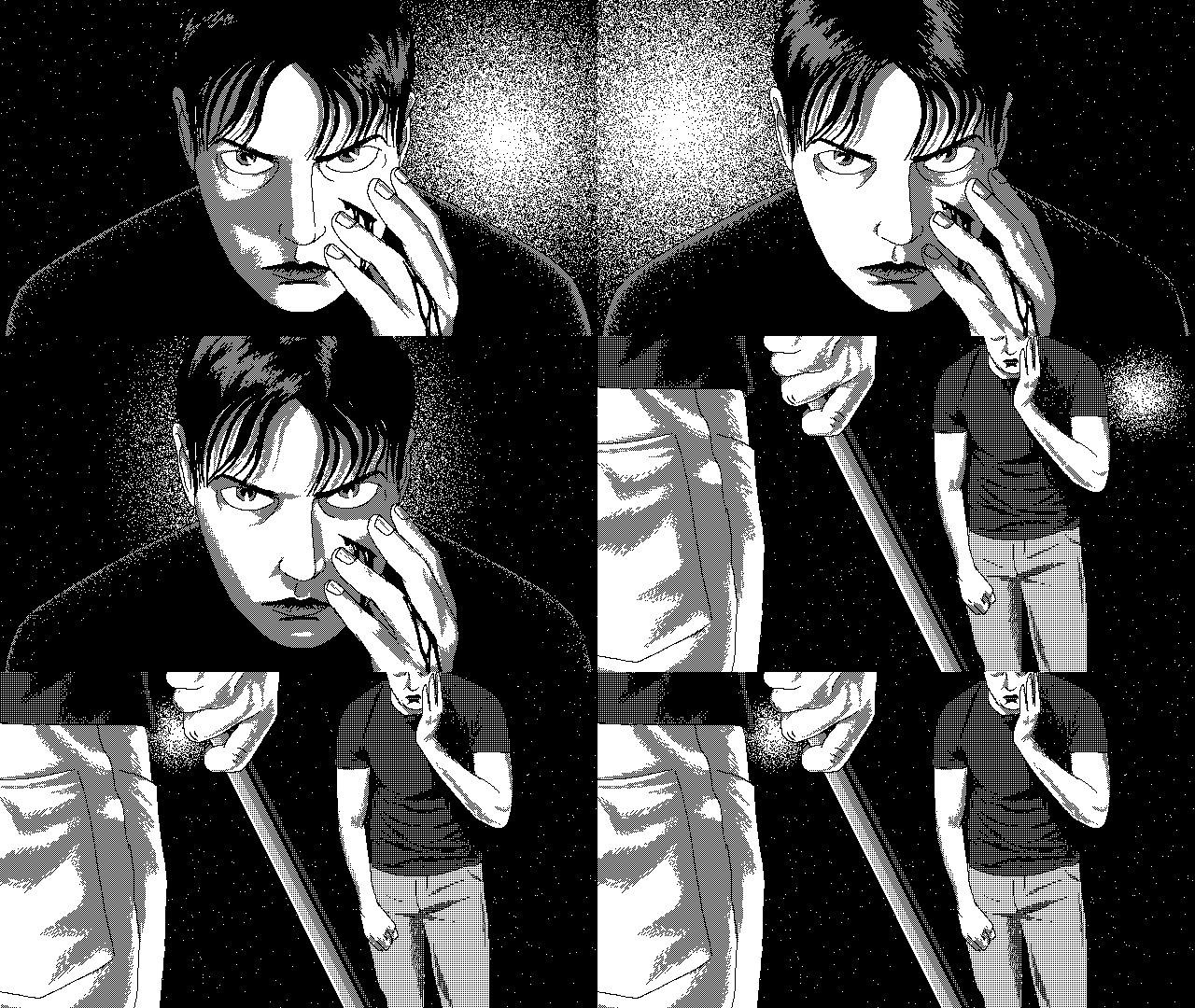
Scaling-
In computer graphics, image scaling is the process of resizing a digital image. Scaling is a non-trivial process that involves a trade-off between efficiency, smoothness and sharpness. As the size of an image is increased, so the pixels which comprise the image become increasingly visible, making the image appear "soft". Conversely, reducing an image will tend to enhance its smoothness and apparent sharpness. Apart from fitting a smaller display area, image size is most commonly decreased (or subsampled or downsampled) in order to produce thumbnails. Enlarging an image (upsampling or interpolating) is generally common for making smaller imagery fit a bigger screen in fullscreen mode, for example. In “zooming” an image, it is not possible to discover any more information in the image than already exists, and image quality inevitably suffers. However, there are several methods of increasing the number of pixels that an image contains, which evens out the appearance of the original pixels. Uses – Pixel art was very often used in older computer and console video games. With the increasing use of 3D graphics in games, pixel art lost some of its use. Despite that, this is still a very active professional/amateur area, since mobile phones and other portable devices still have low resolution and therefore require skillful use of space and memory. Sometimes pixel art is used for advertising too. One such company that uses pixel art to advertise is Bell. The group eboy specializes in pixel graphics for advertising and has been featured in magazines such as Wired, Popular Science, and Fortune 500. Icons for operating systems with limited graphics abilities are also pixel art. The limited number of colors and resolution presents a challenge when attempting to convey complicated concepts and ideas in an efficient way. On the Microsoft Windows desktop icons are raster images of various sizes, the smaller of which are not necessarily scaled from the larger ones and could be considered pixel art. On the GNOME and KDE desktops, icons are represented primarily by SVG images, but with hand-optimized, pixel art PNGs for smaller sizes such as 16x16 and 24x24. Another use of pixel art on modern desktop computers is favicons. Modern pixel art has been seen as a reaction to the 3D graphics industry by amateur game/graphic hobbyists.[citation needed] Many retro enthusiasts often choose to mimic the style of the past. Some view the pixel art revival as restoring the golden age of second and third generation consoles, where it is argued graphics were more aesthetically pleasing. Pixel art still remains popular and has been used in the virtual worlds Citypixel Minecraft and Habbo as well as among hand-held devices such as the Nintendo DS and Cellphones. hniques that lose information as lossy compression.
.gif?timestamp=1568610208669)